
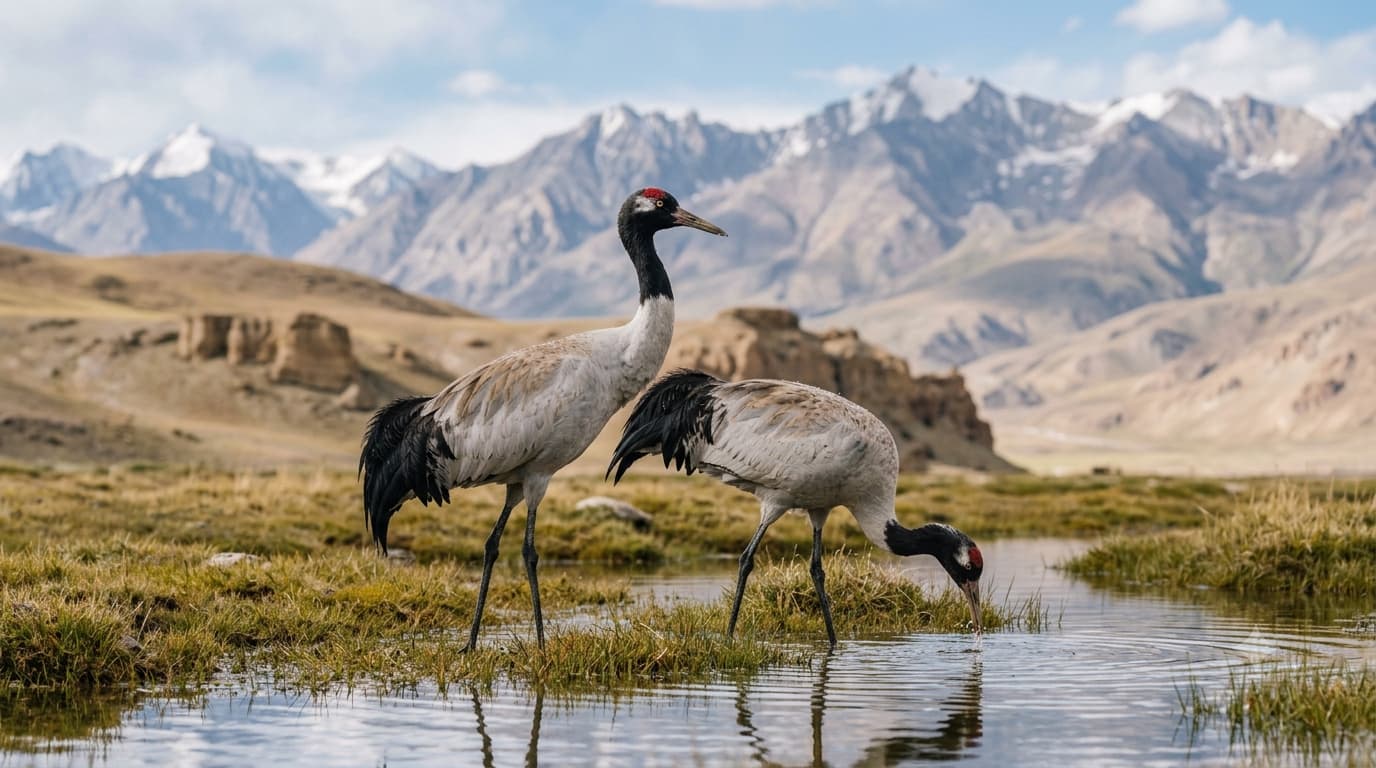

The Ladakh Black-necked Crane Festival celebrates a rare Himalayan bird. It connects travellers with Ladakh’s hidden wildlife. The Black-necked Crane inhabits some of the world’s highest wetlands, where nature remains largely untouched. Ladakh is the only region in India where these rare cranes come every summer to breed and raise their young. Local communities consider seeing a pair of these birds a sign of good fortune. Their graceful movements, striking appearance, and beautiful courtship dances make them a symbol of peace and harmony.
For travellers searching for the best places to visit in August in India, Ladakh now offers a unique experience. India’s first Black-necked Crane Festival will take place from August 11 to 14, 2026. The festival will celebrate the magnificent bird, its habitat, and the Himalayan communities that protect it.
About the Black-necked Crane (Grus nigricollis)
The Black-necked Crane (Grus nigricollis) inhabits the high-altitude wetlands of the Tibetan Plateau and Himalayan regions as a rare crane species. It is the only alpine crane species in the world that breeds at such extreme elevations. The bird has a pale grey body, black head and neck, black flight feathers, and a distinct red crown patch. It lives in wetlands, marshes, river valleys, and alpine meadows between 2,900 and 4,900 metres above sea level. In India, Ladakh is the only region where these cranes arrive during summer for breeding. The wetlands of Tso Kar, Tso Moriri, Hanle, and Chushul Valley provide important breeding grounds for them.
Black-necked Cranes usually form lifelong pairs. They build nests near water bodies using mud and vegetation. Because Black-necked Cranes produce only one or two eggs, conservationists must protect their breeding habitats to ensure their survival. The IUCN lists the species as Near Threatened. Habitat changes, climate fluctuations, and human disturbances continue to affect its natural environment. The Black-necked Crane is also the official State Bird of Ladakh. For local communities, the bird represents the deep connection between Himalayan traditions and the natural world.
What is the Ladakh Black-necked Crane Festival 2026?
The Ladakh Black-necked Crane Festival 2026 is India’s first festival for the world’s only alpine crane species.The Department of Forest, Ecology and Environment, Ladakh, organizes the four-day event.The festival will take place from August 11 to 14, 2026, across Leh, Tso Kar, and Hanle. It celebrates Ladakh’s unique natural heritage while creating awareness about the protection of the Black-necked Crane and its fragile high-altitude habitat. The event brings together wildlife experts, conservationists, local communities, students, and travellers. It connects science, culture, and responsible tourism to highlight the importance of protecting Ladakh’s wetlands.
Through this festival, Ladakh aims to showcase the beauty of its landscapes and the rich biodiversity of the Changthang region. It also encourages visitors to discover a lesser-known side of Ladakh, where rare wildlife and traditional Himalayan culture exist together.
Why is Ladakh Celebrating This Festival?
The Ladakh Black-necked Crane Festival connects cultural traditions with urgent conservation needs. The celebration aims to protect the crane, preserve fragile wetlands, and promote responsible tourism in the Changthang region.
1.Cultural and Spiritual Reverence.
In Ladakhi and Tibetan Buddhist traditions, the Black-necked Crane is considered a sacred bird. People see it as a symbol of peace, harmony, longevity, and good fortune.For generations, local communities have welcomed the arrival of these cranes as a positive sign. Their return to the valleys is often seen as a blessing from nature.
2.Protecting a Crucial Breeding Ground
Ladakh is the only place in India where the Black-necked Crane migrates every summer to breed and raise its young.The high-altitude wetlands of Tso Kar and Hanle provide important nesting areas. Since these cranes lay only one or two eggs, protecting their breeding habitats is essential for the survival of the species.
3.Promoting Nature-Based Livelihoods
The festival also supports sustainable tourism through birdwatching and astro-tourism.By attracting wildlife enthusiasts to the Changthang region, the initiative can create new opportunities for local and nomadic communities. When nature becomes a source of sustainable income, communities have stronger reasons to protect the ecosystem.
4.Combating Environmental Threats
Ladakh’s fragile wetlands face challenges from climate change, habitat degradation, and increasing human activity.The festival creates a platform where scientists, local youth, and policymakers can discuss solutions to protect these unique environments.
Through awareness and conservation efforts, Ladakh hopes to safeguard the Black-necked Crane and its Himalayan home for future generations.
What Can Visitors Expect at the Festival?
The Ladakh Black-necked Crane Festival 2026 offers a combination of wildlife experiences, scientific discussions, cultural celebrations, and community activities. The four-day festival will take visitors across Leh, Tso Kar, and Hanle from August 11 to 14, 2026.
Each destination will showcase a different side of Ladakh, from conservation programmes and cultural events in Leh to crane habitats in Tso Kar and stargazing experiences in Hanle.
Festival Schedule by Location
Leh (August 11–12)
- Black-necked Crane Conference: India’s first dedicated conservation conference for the alpine crane will bring together scientists, researchers, and conservation experts. The conference will focus on crane protection, wetland conservation, and the future of Ladakh’s fragile ecosystems. The event will take place at Buddha Park within the Mahabodhi International Meditation Center (MIMC).
- Youth Environmental Forum: Special sessions and workshops will engage students and young nature enthusiasts. The programme will create awareness about wetland protection and the importance of conserving Ladakh’s wildlife.
- Cultural Evening Performances: Visitors can experience Ladakhi and Changpa traditions through folk songs, traditional dances, storytelling, and cultural presentations.
- Local Handicrafts and Food Markets: Exhibitions will showcase regional artisan work, traditional handicrafts, and authentic Ladakhi cuisine.
Tso Kar (August 12–13)
- Expert-Led Birdwatching Excursions: Visitors can join guided birdwatching trips at the Tso Kar Ramsar Wetland Complex., an important summer breeding ground for Black-necked Crane pairs in Ladakh.
- Wetland Nature Walks: Educational eco-tours will introduce visitors to the fragile wetland ecosystem and local wildlife, including the Kiang (Tibetan wild ass).
Hanle (August 13–14)
- Dark Sky Observation: Visitors can enjoy stargazing and astrophotography sessions at the Hanle Dark Sky Reserve, known for its clear Himalayan skies.Hanle is also one of India’s finest destinations for eco-tourism and astro-tourism. If you enjoy nature-based travel experiences, read our complete guide to Eco Tourism & Wildlife Travel Destinations in India for more unique places to explore.
- Field Excursions and Crane Sightings: Guided excursions across the Changthang Plains near Hanle will help visitors explore crane habitats and understand this unique high-altitude ecosystem.
- Community Cultural Exchanges: Visitors can interact with local Changpa nomadic communities through storytelling sessions and traditional cultural experiences.
Who Can Participate in the Ladakh Black-necked Crane Festival 2026?
The Ladakh Black-necked Crane Festival 2026 is open to travellers, birdwatchers, researchers, students, photographers, and anyone interested in wildlife, conservation, and Himalayan culture.
Visitors can attend the festival programmes across Leh, Tso Kar, and Hanle. However, access to some locations has specific travel requirements because Tso Kar and Hanle are located in protected border areas.
- Inner Line Permit (ILP): Indian tourists and international visitors need the required permits to travel to restricted areas like Tso Kar and Hanle.
- Foreign Tourist Restrictions: International travellers may require additional permits, such as a Protected Area Permit (PAP), and should confirm the latest rules through registered travel agents or official authorities in Leh before planning their visit.
Visitors should check the latest permit requirements before travelling to the festival locations.
How to Register for the Ladakh Black-necked Crane Festival 2026
Visitors can register for the Ladakh Black-necked Crane Festival 2026 through the official digital registration system provided by the Department of Forest, Ecology & Environment, UT Ladakh.
- Step 1: Access the Registration Form. Visit the official Ladakh Tourism Facebook or Instagram page and open the festival announcement. Scan the “Scan to Register” QR code displayed on the official festival poster.
- Step 2: Complete the Online Registration. After scanning the QR code, you will be redirected to the online registration form. Fill in your personal details, including your name, contact information, and occupation. You can also indicate the festival activities you plan to attend, such as the conference or field excursions.
- Step 3: Plan Your Stay. Since the festival is held across Leh, Tso Kar, and Hanle, book your accommodation and transport in advance. This is especially important if you plan to attend activities at multiple locations.
- Step 4: Obtain the Required Travel Permits.Festival registration does not replace the permits required to visit restricted areas.
- Indian visitors: Obtain an Inner Line Permit (ILP) before travelling to restricted regions such as Tso Kar and Hanle. The permit can be applied for through the official Leh LAHDC portal or at the designated permit office in Leh.
- International visitors: Apply for a Protected Area Permit (PAP) through a registered travel agent in Leh. Current regulations may require a minimum group size and other conditions, so check the latest guidelines before your trip.
Important Note: Complete both your festival registration and the required travel permits before travelling to the festival venues.
How to Plan Your Black-necked Crane Festival Trip
Planning ahead will help you enjoy the Ladakh Black-necked Crane Festival without any last-minute issues.
- Arrive in Leh Early: Reach Leh at least 2–3 days before travelling to Tso Kar or Hanle. This gives your body enough time to adjust to the high altitude.
- Book Accommodation in Advance: Reserve your stay in Leh, Tso Kar, or Hanle as early as possible. Accommodation options in remote areas are limited, especially during the festival.
- Carry the Required Permits: Complete your festival registration and obtain the necessary Inner Line Permit (ILP) or Protected Area Permit (PAP) before travelling to restricted areas.
- Pack for High-Altitude Weather: Even in August, temperatures can drop quickly after sunset. Carry warm clothing, comfortable walking shoes, sunscreen, sunglasses, and a reusable water bottle.
- Respect Wildlife and Local Communities: Follow the instructions of forest officials and guides. Maintain a safe distance from wildlife, avoid disturbing nesting areas, and respect the customs of local communities.
With proper planning, you can enjoy the festival while experiencing Ladakh’s unique wildlife, landscapes, and culture responsibly.
Extend Your Journey: If you are spending extra time in Hanle after the Ladakh Black-necked Crane Festival, consider exploring nearby Mig La Pass, located in the Changthang region about 35 km from Hanle. Read our detailed Mig La Pass travel guide before planning your visit, as access regulations can change due to security restrictions.
Conclusion
The Ladakh Black-necked Crane Festival is more than a new tourism event. It is India’s first festival dedicated to the world’s only alpine crane and a celebration of Ladakh’s rich natural and cultural heritage. By bringing together local communities, conservationists, researchers, and travellers, the festival highlights the importance of protecting the fragile wetlands where this rare bird breeds every summer.
If you are planning a trip to Ladakh in August 2026, this four-day festival offers a unique opportunity to experience wildlife, culture, and conservation in one journey. Whether you come for birdwatching, cultural programmes, or simply to witness one of the Himalayas’ most remarkable birds, the Ladakh Black-necked Crane Festival promises an experience that goes beyond sightseeing and leaves a deeper appreciation for Ladakh’s unique ecosystem.
If you enjoy exploring Ladakh in different seasons, don’t miss our complete guide to the Ladakh Apricot Blossom Festival. Held every April, it offers a completely different side of Ladakh, with blooming apricot orchards, village celebrations, and spring landscapes.






Exciting and Wonderful destination. A place not to miss for any traveller.
This article has inspired me to visit this place.
Congratulations dear Manu for giving insight to the very rare festival happening.
Thankyou for the support