
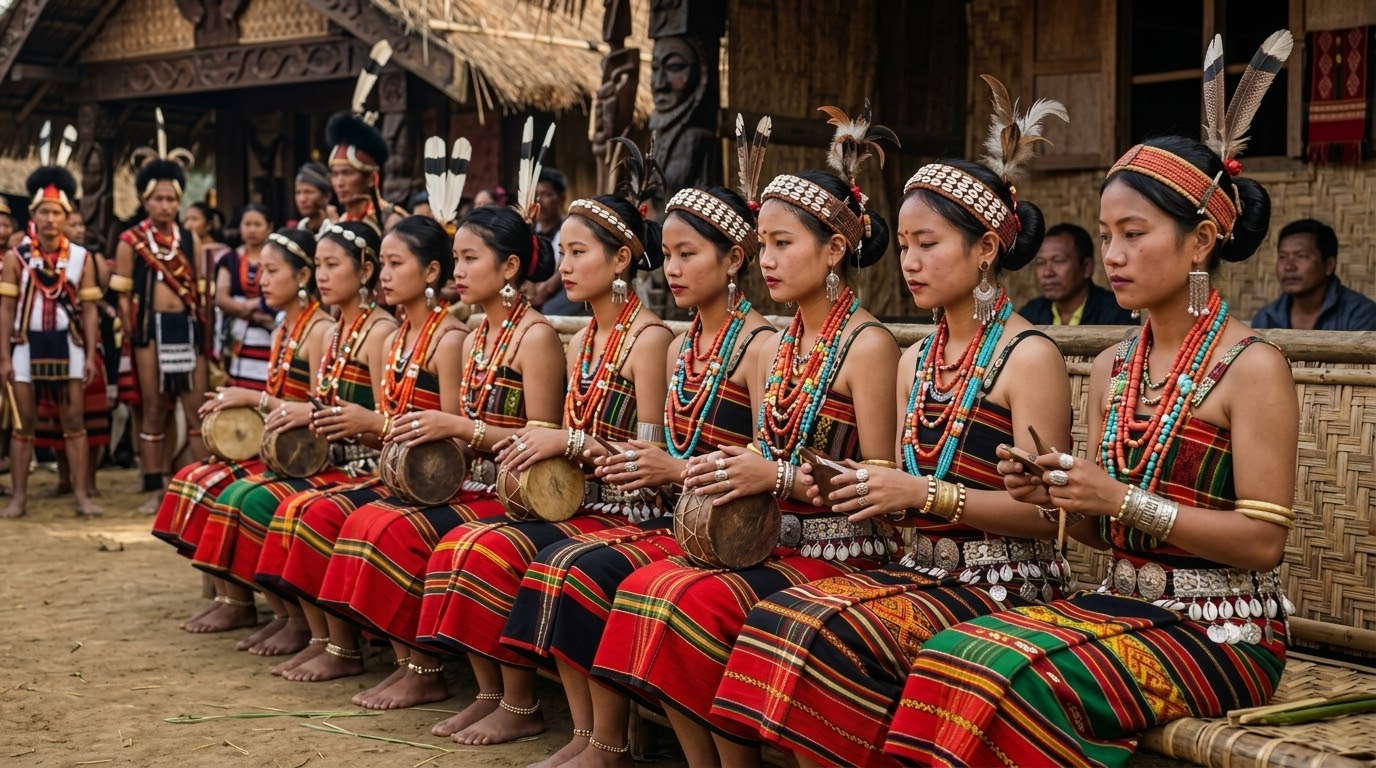

Kisama Village is more than just the temporary venue for Nagaland’s famous Hornbill Festival. Nestled on a scenic hillside near Kohima, this permanent open-air museum brings together the distinct traditions, crafts, food, and music of Nagaland’s 17 major tribes every December. While most tourists stick to the performances at the main amphitheater, the real magic lies hidden in the village’s quieter corners. As you wander through the complex, you can discover towering traditional morungs, watch master artisans at work, and sample authentic regional dishes. If you are planning a trip for hornbill festival 2026 this guide will help you step away from the crowds and uncover what most visitors miss.
Architectural Secrets of the Naga Morungs
The morungs are among the most striking structures at Kisama Heritage Village. Traditionally, these massive buildings served as youth dormitories and vital community spaces where younger members learned tribal customs, warfare, and oral traditions from elders. At Kisama, 17 distinct morungs stand side-by-side, representing Nagaland’s officially recognized tribes. From a distance, the thatched structures may appear similar. However, if you look closely at their rooflines, intricate wooden carvings, and massive pillars, you will discover the unique traditions and artistic styles of each community.
1. Look Closely at the Roof Designs
Start your architectural tour by looking up at the roof gables. On several structures, such as the Angami or Ao morungs, you will notice heavy wooden beams crossing at the top to form V-shaped “horns” (Kika) pointing toward the sky. Historically, these elaborate roof extensions were not just for decoration; they were a status symbol, permitted only on the houses of wealthy villagers who had sponsored massive, community-wide “Feasts of Merit.”
2. Examine the Wooden Carvings
Next, study the heavy wooden pillars framing the entrances. The reliefs hand-carved into the wood are visual history books. Look for recurring motifs that tell stories of tribal identity: hornbill heads represent beauty and elite status, elephants and tigers symbolize physical strength, and human figures point back to the ancestral warrior era of the Naga people. Each tribe has a distinct layout, meaning a carving on the Konyak morung will tell a completely different story than one on the Lotha morung.
3. Discover the Massive Traditional Log Drums
Keep an ear and an eye out for the colossal log drums (Mezha or Kong) tucked inside or adjacent to structures like the Ao and Phom morungs. Carved entirely out of a single, hollowed-out tree trunk, these instruments are engineering marvels. Historically, they served as acoustic telegraphs. Beaten with heavy wooden mallets in complex rhythms, a single drum could send messages across miles to sound alarms for an enemy attack, signal a village fire, or announce a major festival.
Inside Track for 2026: Don’t limit your visit to photographing the outside. Step into the dim interiors to see how the entire bamboo framework is lashed together securely using only organic cane ropes—without a single metal nail. If a tribal representative is seated near the central hearth, take a moment to ask them about the specific animal totems guarding their doorway.
Planning to Visit the Hornbill Festival 2026?
Want to experience Nagaland’s vibrant culture and the spectacular Hornbill Festival without the hassle of planning everything yourself? Explore this group tour to Kisama village for travel dates, itinerary details and booking information.

Inside Naga CraftScape: Beyond the Souvenir Stalls
At Kisama Heritage Village, Naga CraftScape offers a closer look at the traditional skills behind local handicrafts. Alongside finished products, the pavilion has hosted live demonstrations by Naga artisans, giving visitors an opportunity to discover the techniques behind these crafts.
During the 2025 Hornbill Festival, demonstrations included Chang cotton spinning, Phom earthen pottery, Khiamniungan nettle weaving, Khiamniungan basketry and Chang wood carving. Other featured crafts included Konyak ornaments, Konyak gunsmithing, the Pochury Awathru wind chime and the Chang Kongkin, a traditional Jew’s harp. Check the official hornbill festival 2026 programme to confirm which demonstrations will be available during your visit.
Official Nagaland tourism website : Nagaland Tourism Website
1. Watch Traditional Crafts Take Shape
- Nettle weaving: Khiamniungan nettle weaving was among the crafts featured at Naga CraftScape in 2025. The processing of tough nettle fibers into wearable textile threads makes this a fascinating demonstration to watch.
- Cotton spinning: Chang cotton spinning demonstrates an important stage of textile production. Watching an artisan transform raw cotton fibers into uniform thread helps explain the immense labor behind handmade tribal clothing.
- Pottery and basketry: Phom earthen pottery and Khiamniungan basketry showcase two different craft traditions. Pottery turns earth into vessels, while basketry uses weaving techniques to create practical objects. Pay close attention to the shaping techniques, as traditional Naga pottery is famously molded entirely by hand without a potter’s wheel.
- Wood carving: Chang wood carving highlights the skill involved in shaping wood by hand. Watching a master craftsman carve a single piece of wood reveals how raw timber is transformed into intricate decorative panels or functional community objects.
These demonstrations were documented during the hornbill festival 2025. Their availability and schedule may differ in hornbill festival 2026.
2. Explore Naga Textiles and Handicrafts.
The Handloom and Craft Pavilion at Kisama has featured Naga textiles, traditional attire, bamboo and cane products, wood carvings, jewellery and beadwork. In 2025, the pavilion offered a range of handloom products, handicrafts and pottery.
- Naga textiles are worth exploring because weaving traditions and designs vary among communities. Look for the deep red, black, and blue patterns of authentic Naga shawls. Every stripe, color combination, and embroidered motif indicates the wearer’s specific tribe, social standing, or achievements.
- Hand-Carved Woodwork: Seek out functional kitchen items like single-piece wooden platters (Khuru) or decorative panels carved by Konyak master craftsmen, who are globally renowned for their wood-carving precision.
If you plan to buy something, check its materials, maker and place of origin. This can help you understand the item’s background and make a more informed purchase.
3. Learn the Story Behind the Craft
The story behind a handmade object can be just as interesting as its appearance. If an artisan is available, ask how the craft is made, where the materials come from and how the skill is passed on to younger generations.You may learn how a particular item is used in everyday life or why a technique matters to its community. These details add context to what you see and help you appreciate the knowledge behind the finished product.
Inside Track for 2026:
The best time to explore the Naga CraftScape is during the mid-morning lull (around 10:30 AM), right after the main cultural arena performances begin. The pavilion is much less crowded then, giving you open views of the artisans’ hands and the freedom to ask questions without rushing.
What to Eat at Kisama: Naga Dishes Worth Trying
Food at Kisama Heritage Village offers a way to discover the differences between Naga communities. During Hornbill Festival, morungs may serve dishes associated with the communities they represent, giving visitors a chance to try regional recipes in a cultural setting.
1. Smoked Pork with Axone
One dish to look for is smoked pork with axone, also called akhuni. Axone is made from fermented soybeans and has a strong, distinctive flavour. The Sümi morung at Kisama has served smoked pork with axone, along with green vegetables cooked with arum (taro) leaved and ginger chutney made with axone. These dishes offer a taste of Sümi food traditions.
2. Try Ao Naga Specialities
The Ao morung has featured several dishes that are worth knowing by name:
- Rosup: A traditional Ao dish made with mixed vegetables, dry fish and bamboo shoots. The bamboo shoots may be dried or fermented.
- Pork with bamboo shoot:A classic Naga pairing that balances the richness of the pork with the sharp, acidic bite of fermented bamboo shoots.
- Pork cooked with anishi: Anishi is a unique ingredient made from fermented taro leaves, which are ground, pressed into patties, and smoked over the hearth before cooking.
- Amrusu: A thick, savory rice porridge that is traditionally prepared with shredded chicken, pork, or seasoned with axone.
These dishes were documented at the Ao morung during the 2024 Hornbill Festival. Availability can vary from year to year, so check the menu when you visit.
3. Look for Bamboo Shoot and Other Local Ingredients
Bamboo shoot, fermented soybean, smoked meat and fermented leaves are important ingredients in Nagaland’s food traditions. They contribute distinct flavours to stews, chutneys and meat dishes. Recipes differ across communities, so the same ingredient may appear in different preparations at Kisama. If you prefer not to eat meat, ask whether a stall has vegetable dishes. You can also check how a dish is prepared if you have food allergies or dietary restrictions.
Visitor tip: Ask which morung serves the dish you want to try before ordering. The food offerings are not necessarily the same at every stall, and specific dishes may not be available every day. Checking the menu on arrival is the best way to find out what is being served during your visit.
Looking for a Place to Stay?

Explore accommodation options in Kohima and around Kisama village for your Hornbill Festival trip. Check availability and compare prices before booking.
4. Practical Tips for Visiting Kisama During Hornbill Festival 2026
Kisama Heritage Village sits roughly 12 kilometers south of Kohima along National Highway 2. With the Hornbill Festival 2026 running from December 1 to December 10, a little advance planning will ensure you spend your time exploring the morungs rather than getting stuck in transit delays.
1. Navigate the Kohima-to-Kisama Route
You can reach the heritage village via local taxis or the dedicated festival shuttles. Building on previous years, the Nagaland State Transport (NST) is expected to operate special daily shuttle buses between central Kohima and the Kisama gates.
- Beat the Traffic: The single-lane highway experiences severe traffic jams during peak festival hours (11:00 AM to 3:00 PM). To avoid losing hours on the road, plan to leave Kohima by 8:30 AM.
- Parking Restrictions: If you are driving a private rental vehicle, strictly follow the local traffic advisories. Festival authorities enforce strict designated parking zones away from the main gate to manage the heavy congestion.
2. Prepare Cash and Digital Payment Backups
While digital UPI payments are expanding across Nagaland, do not rely on them at Kisama. Because thousands of visitors use the local cell towers simultaneously, mobile networks frequently drop out.
- Carry Physical Cash: Keep a healthy amount of physical Indian Rupees (INR) in small denominations for buying food at the morungs, entering the World War II Museum, and purchasing handmade crafts.
- Entry Tickets: Confirm the official 2026 entry ticket rates and separate camera permits at the main gate ticketing counter upon arrival.
3. Pack for Sudden Hillside Weather Shifts
Kisama is nestled in a mountainous landscape where the weather changes rapidly.
Layer Up: December daytime temperatures are usually pleasant and sunny, but as soon as the sun dips behind the hills around 4:00 PM, temperatures can plunge rapidly toward 10°C (50°F) or lower. Bring a heavy jacket or a traditional wool shawl for the evening performances.
Footwear: Wear sturdy, closed-toe walking shoes or sneakers. The village layout is built across a stepped hillside, requiring a significant amount of uphill walking on uneven dirt paths and stone steps.
4. Observe Photography and Cultural Etiquette
The vibrant traditional attire (tsüngkotepsü shawls, hornbill feathers, and brass trophiets) makes Kisama a photographer’s paradise. However, cultural respect is paramount.
- Ask for Permission: Always ask for permission before taking close-up portraits of dancers, elders, or artisans at work. A simple smile and nod are usually met with warm compliance.
- Respect Sacred Spaces: Pay attention to signage. Certain inner chambers of the older morungs or specific ceremonial rituals may have strict “no-photography” rules to protect their cultural sanctity.
Final Visitor Tip: Do not rely on outdated, pre-pandemic travel brochures. For the most accurate daily event schedules, performance line-ups, and sudden transit updates, check the official Nagaland Tourism portal right before your trip begins.
Final Thoughts: Discover More of Kisama Village
Kisama Village offers more than a venue for the Hornbill Festival. Its traditional morungs, Naga CraftScape and community food stalls provide a closer look at Nagaland’s cultural heritage. During Hornbill Festival 2026, take time to explore the architecture, discover traditional crafts and try dishes associated with different Naga communities. Check the official programme before your visit, as demonstrations and activities may vary by day.
With a little planning, you can experience more of Kisama beyond the main performances and leave with a deeper appreciation of Naga culture.
Frequently Asked Questions About Kisama Village
1. Where is Kisama Heritage Village?
Kisama Heritage Village is in Kohima district, Nagaland, India, around 12 km from Kohima. It hosts the annual Hornbill Festival and features traditional morungs, cultural displays, craft areas and food stalls.
2. When is Hornbill Festival 2026?
Hornbill Festival 2026 is scheduled for 1–10 December 2026 at Kisama Heritage Village, near Kohima, Nagaland. Check official announcements for the daily performance schedule and other festival updates.
3. How many days should I spend at Kisama?
One full day gives you time to explore the main performance arena, morungs, craft displays and food stalls. If you also want to attend evening concerts or explore Kohima and nearby attractions, consider spending two or three days in the area.
4. Do I need a permit to visit Nagaland?
Permit requirements depend on your nationality and circumstances. Indian visitors from outside Nagaland should check the current Inner Line Permit requirements through the official Nagaland government portal. Foreign visitors should verify the latest registration and travel requirements before departure.
5. How do I get from Kohima to Kisama?
Kisama is approximately 12 km from Kohima. Visitors can use taxis or festival transport if available. Check official announcements for the 2026 shuttle routes, timings, fares and parking arrangements.
6. What should I eat at Kisama?
Food offerings vary by morung and stall. Dishes documented at previous festivals include smoked pork with axone at the Sümi morung and Ao specialities such as rosup and dishes prepared with bamboo shoots or anishi. Availability may vary during the 2026 festival.
7. What should I bring when visiting Kisama?
Wear comfortable walking shoes and bring warm clothing for cool mornings and evenings. Carry some cash as a backup for purchases, and check the latest festival information for entry fees, transport and photography rules.