
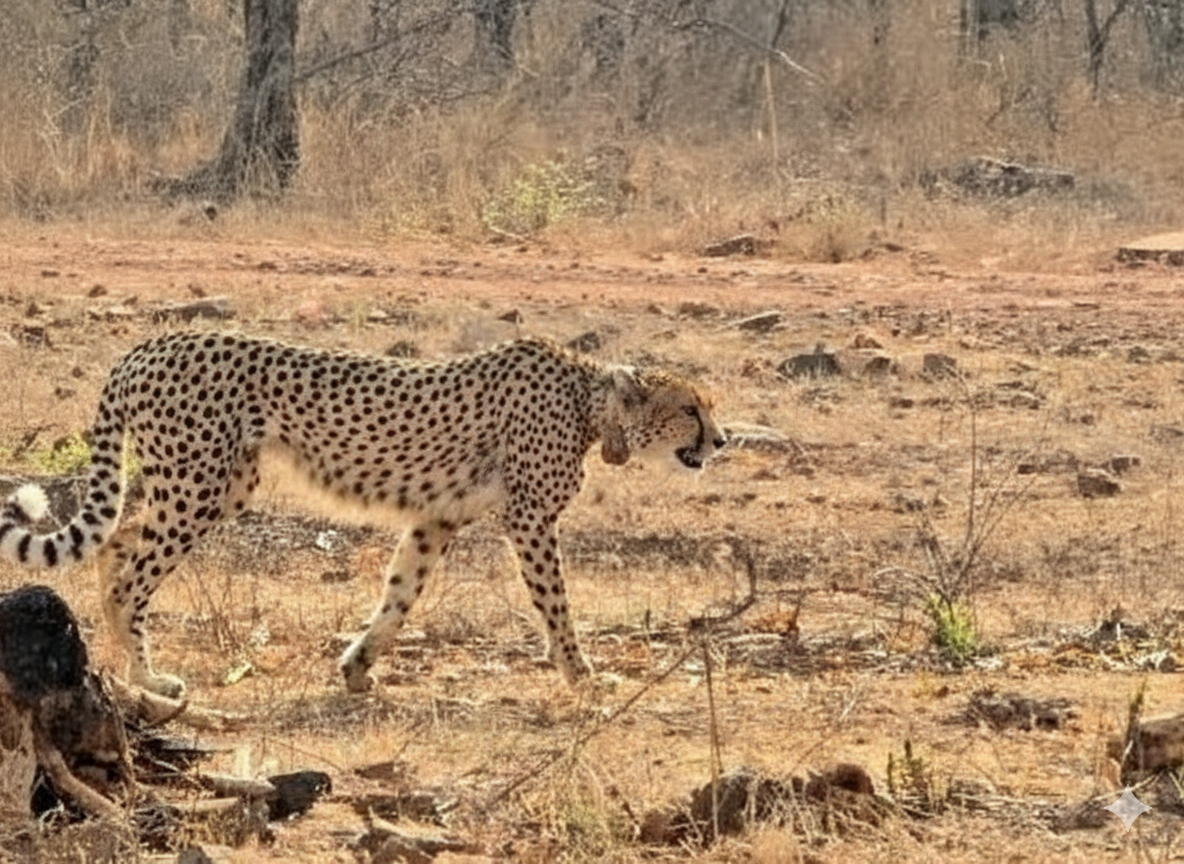

Travelers are looking for trips that feel alive and different. Beaches are familiar. Mountains are expected. But the wild offers surprises. Imagine driving across golden grasslands at sunrise. The air is fresh, and the sky glows. A guide points to the horizon. A slender, spotted animal pauses, then runs. Fast, graceful, unstoppable. This is the thrill of Cheetah Safari India, India’s first cheetah safari at Kuno National Park.
Cheetah Reintroduction Program
India’s cheetah reintroduction is historic and global in scale. The species disappeared from India in 1952. Under Project Cheetah, the government brought 20 cheetahs from Africa to Kuno National Park in two batches. Eight cheetahs came from Namibia in September 2022 and twelve came from South Africa in February 2023. They were carefully monitored, helped to adapt, and gradually released into the wild. The program ensures they are healthy, safe, and able to hunt naturally. Successful cub births, like the three of female cheetah Gamini in 2026, show the project is working. This is a major milestone in restoring India’s lost predator and boosting biodiversity.
About Kuno National Park.
Kuno National Park is in Sheopur district, Madhya Pradesh. It covers more than 700 square kilometers of grasslands, scrub, and light forest. The open land is perfect for cheetahs to run, hunt, and live naturally.
The park also hosts chital, nilgai, leopards, hyenas, and more than 200 bird species. Visitors can enjoy seeing a wide variety of wildlife along with cheetahs. Kuno is not only beautiful but also the center of India’s cheetah revival story.
Safari Timings and Rules.
Cheetah Safari India runs in morning and evening slots all year.
Safari Timing.
From 1 October to 31 December, safaris are 07:00 AM to 11:30 AM and 03:00 PM to 06:00 PM. From 1 January to 31 March, they run 06:00 AM to 11:00 AM and 03:00 PM to 06:00 PM. From 1 April to 30 June, the timings are 06:00 AM to 11:00 AM and 04:00 PM to 07:00 PM. The park closes during the monsoon season. All vehicles must stay on paths, keep passengers inside, and avoid loud noises. These rules help keep visitors safe and protect wildlife.
Safari Rates.
Safari charges are per vehicle, not per person. Official Gypsy safaris cost ₹4,500 per vehicle (up to six people). Private light vehicles cost ₹1,200 per vehicle. Private vehicles must take a guide, costing ₹400 per safari. Rates can change slightly during peak season. Payments are made at the park gate or online. Early booking is highly recommended to secure a spot.
Sighting Possibilities.
Cheetahs move freely in the park. Sightings are not guaranteed, but the open grasslands make it easier to see them. Early morning and late afternoon safaris offer the best chances. Visitors may also spot deer, nilgai, wild boar, and many birds.
The births of cheetah cubs in 2026 show Kuno is a safe habitat. Visitors can witness wildlife thriving in its natural environment. Seeing a cheetah run across the plains is a rare and unforgettable experience.
Accommodation Options.
Visitors can stay in official or private lodges near Kuno.
Official Accommodation.
Forest Rest Houses.
The park has four forest rest houses managed by the forest department. Booking is done through the park office by phone or email. Approval comes from the Chief Conservator of Forest (Lion Project) and Divisional Forest Officer, Kuno, Sheopur. Rooms are limited, so early booking is essential.
Private Lodges and Hotels.
Private lodges and eco-resorts are near the park. Budget hotels are in Sheopur and nearby towns. Premium stays are in Gwalior. These options offer comfort while keeping guests close to the safari experience.
How to Reach Kuno National Park
Kuno is about 150–170 km from Gwalior. Travelers can fly into Gwalior Airport and drive about 4 hours. Rail travelers can use Shivpuri or Sheopur Kalan stations and continue by road. Highways from Delhi, Jaipur, and Indore connect to the park. Many travelers also choose self-drive for flexibility.
Why Cheetah Safari India Matters.
The safari is more than a trip. It is a historic conservation achievement. India is one of the few countries to bring back a large predator after it disappeared. Visitors see wildlife revival while supporting local communities through tourism, guides, and jobs. Cheetah Safari India blends adventure, learning, and history. When a cheetah runs across the plains, travelers see more than speed—they see hope, revival, and a species returning home.
If you enjoy big cat safaris, you can also explore the tiger sightings at Tadoba-Andhari Tiger Reserve through the Lohara Jungle Safari Gate.For a completely different habitat, the Valmiki Tiger Reserve safari experience in Bihar offers dense forests and eco-tourism stays.Adventure lovers can also head to the Himalayas to experience the Snow Leopard tour in Uttarakhand.
Travel Tips for Cheetah Safari India.
- Book in advance – Safari slots and park rest houses fill quickly, especially from October to March.
- Best time for sightings – Early morning and late afternoon safaris offer the best chance.
- Pack wisely – Bring binoculars, camera with zoom, sunscreen, hat, and comfortable shoes.
- Follow park rules – Stay inside vehicles and avoid loud noises.
- Travel light – Safari jeeps have limited space.
- Combine with local sightseeing – Visit Sheopur or Shivpuri for heritage sites and local culture.
- Stay hydrated and carry snacks – Safaris last around three hours; water and light snacks are needed.



[…] When local people benefit from tourism, they protect the wildlife. This “community-first” approach has already worked well in Hemis National Park. Now, Uttarakhand is ready to follow that successful conservation.India’s wildlife conservation efforts also include the Cheetah Safari at Kuno National Park. […]
[…] A safari here feels like a journey back to a much wilder era of our planet. You can explore the different ranges by jeep or take a relaxing boat cruise. Sightings are very common because the animals often graze in open areas with great light. Kaziranga proves that hard work and dedication can save a species from disappearing forever. It is a vital stop for anyone who wants to see the unique biodiversity in India.India is also expanding wildlife tourism with new initiatives such as the upcoming Cheetah safari in Kuno National Park. […]
[…] for their trip. While you are in Madhya Pradesh, it is highly recommended to also visit India’s First Cheetah Safari at Kuno National Park to see the country’s newest wildlife success […]
[…] interested in unique wildlife experiences beyond tiger safaris can also explore options like the cheetah safari in Kuno National Park, which is gaining attention in recent […]