Physical Address
304 North Cardinal St.
Dorchester Center, MA 02124
Physical Address
304 North Cardinal St.
Dorchester Center, MA 02124

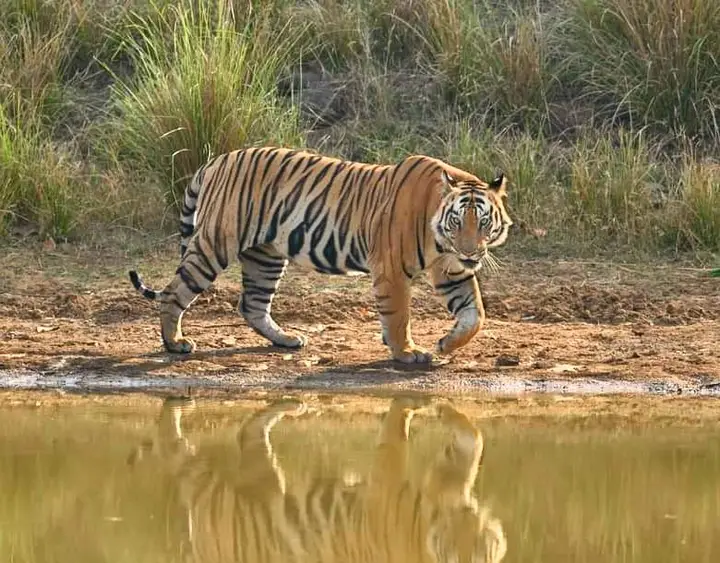
Before the sun paints the forest gold and the first birdcall breaks the hush of dawn, Valmiki Tiger Reserve feels like a waking dream — a place where the rustling bamboo and distant roars compose a living poem. Named after the sage Valmiki, whose verses gave life to the Ramayana, this forest too reads like an epic: majestic, alive, and full of moments that take your breath away.
Imagine driving down a dusty road flanked by tall sal trees and hearing the rumble of the Gandak river just beyond the forest’s edge. At the entrance, a sense of anticipation fills the air — this is not just another wildlife park; it is a rhythm of life.
Valmiki, the only tiger reserve in Bihar, lies in the north‑western corner of West Champaran district. Spanning nearly 900 sq km of Terai and bhabar forest, it connects to the rich Chitwan ecosystem across the Nepal border. The varied terrain — from dense woodlands and grasslands to winding rivers — supports a remarkable array of wildlife and provides unforgettable experiences for visitors.
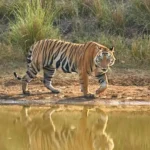
Here, the Bengal tiger reigns supreme, but it shares this wilderness with leopards, sloth bears, Indian bison (gaur), deer, wild boars, and over 250 species of birds — an orchestra of life you’ll hear long after your visit.
Valmiki isn’t a place you visit — it’s a place you experience. The forest invites you in through a range of activities, each offering a different way to connect with the wild.
At sunrise and again in the late afternoon, the forest hums with energy. This is when the jeep safaris roll out — sturdy vehicles gliding over sandy tracks, guided by experts who read animal signs like stories in the earth.
Jeep safaris take you into zones such as Valmikinagar, Manguraha, and Govardhana — each with its own landscape and wildlife rhythm. In the early hours, deer graze quietly, birds flit overhead, and if fortune smiles, a tiger might appear beside a waterhole, golden eyes fixed on the horizon.
Booking is essential, especially in peak season (November–April), as slots fill quickly and the reserve closes during monsoon for safety and conservation.
For those who prefer a steadier, quieter pace, guided nature walks are a wonder. Meandering through shaded trails, you learn the stories of lesser‑seen creatures: colourful birds, butterflies dancing on shafts of sunlight, and the chatter of tree frogs hidden in leaves. These walks deepen your appreciation of the ecosystem’s delicate balance.
At many points in the reserve, the serene Gandak river reflects the blue sky like a mirror. Rafting here — over calm stretches or mild rapids — offers a refreshing, almost poetic way to experience the forest from the water. Rafts drift past herons and kingfishers, and the rhythm of ripples becomes part of your memory.
If you seek something different, elephant safaris let you move gently above the forest floor, while cycling trails take you at your own pace through quieter corners of the reserve. Both activities are excellent for observing wildlife without the hum of engines.
After a day in the wilderness, the real magic happens at your accommodation. At Valmiki, basic yet comfortable bamboo and eco huts sit tucked among trees, their architecture and materials chosen to leave minimal impact on the forest while blending with its colours and textures.
These stays offer something rare: silence, softened only by the chorus of insects and distant calls of birds. Here, you sleep with the forest — not apart from it.
A simple cup of tea at sunrise, the first light over the treetops, the peaceful quiet when evening deepens — these are the experiences that stay with you far beyond the trip.
Valmiki measures time in rhythms of nature. The reserve is typically open from October through April, closing during monsoon (July–September) to protect wildlife and ensure visitor safety. On weekdays, safaris and core activities pause on Tuesdays.
Use the official Valmiki Tiger Reserve booking portal for safari permits and accommodation.
Bring valid ID for all bookings — Aadhar for Indian citizens, passports for foreign visitors.
Dress in layers; early mornings can be cool, especially in winter.
November–March: Pleasant weather and high wildlife visibility
April–June: Wildlife often gathers near water sources, making sightings rewarding.
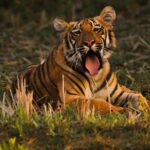
The true stars of Valmiki Tiger Reserve are its inhabitants. The elusive Bengal tiger, regal and powerful, is the dream of every visitor — even a distant glimpse or heard roar can electrify a safari. Other big residents include leopards and sloth bears, while herds of deer and Indian bison graze peacefully in the meadows. Birdwatchers find joy in over 250 species of birds, from colourful kingfishers along rivers to majestic raptors riding thermal winds..
Every sighting — whether a tiger slinking through tall grass or a bright bird alighting on a branch — becomes a memory stitched into the tapestry of your journey.
What makes Valmiki different isn’t just its wildlife; it’s the way the forest and visitors co‑exist. Eco‑tourism here is not a buzzword — it’s a philosophy. From bamboo huts to guided trails designed to reduce disturbance, every part of the experience encourages respect for nature’s rhythm. You don’t just see animals; you learn why they’re here, how they survive, and how humans can help protect their world.
It’s a gentle school of wilderness wisdom — one that stays with you long after the forest trails fade from view.
When the sun dips behind the treetops and the sky blushes into night, Valmiki Tiger Reserve whispers its secrets in rustling leaves and subtle shadows. Walking back from a quiet riverbank or settling into your hut with the scent of damp earth around you, you realize this place is more than a destination — it’s a connection, a breath of wildness in a world that moves too fast.
Here, the forest speaks. And if you pause long enough, you feel its heartbeat too





[…] rules the peaks, the Bengal Tiger thrives in the foothills. To see this in action, read about the [Valmiki Tiger Reserve: Where the Forest Breathes and Tigers Whisper]. Both species are vital to India’s wild […]
[…] one of India’s iconic tiger reserves.Tiger reserves in India range from the riverine forests of Valmiki Tiger Reserve in Bihar to the dry teak forests of Tadoba-Andhari Tiger […]