Physical Address
304 North Cardinal St.
Dorchester Center, MA 02124
Physical Address
304 North Cardinal St.
Dorchester Center, MA 02124

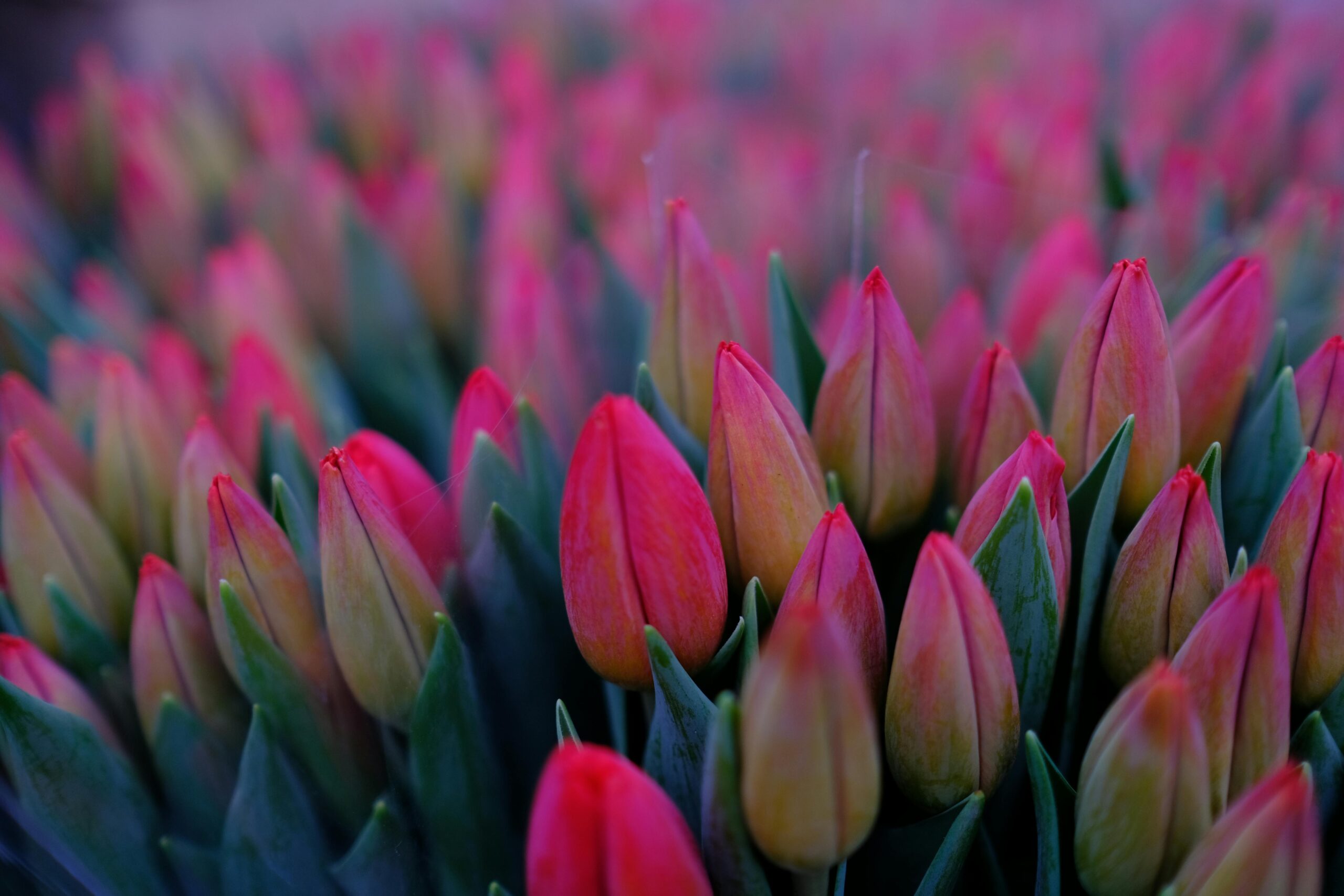
The annual Kashmir Tulip Garden Festival has officially opened at the famous Indira Gandhi Memorial Tulip Garden. Visitors can now enjoy a spectacular view of millions of tulips in full bloom. The garden spreads across terraced slopes of the Zabarwan Mountains and overlooks the scenic Dal Lake. During the festival, the Kashmir Valley transforms into a vibrant sea of colors. The event runs from mid-March to mid-April 2026. It marks the arrival of spring and is one of the most celebrated flower festivals in Jammu and Kashmir.
Visitors from across India and abroad are arriving to witness the festival’s grandeur. Guided walks allow tourists to explore the carefully arranged terraces, where each turn reveals a new perspective of the garden’s design and layout. Informational boards and local guides share insights about the different tulip varieties and the history of the garden. Amid the structured paths and curious visitors, there is a fleeting moment when the breeze moves gently through the blossoms, carrying a whisper of the season’s quiet magic.
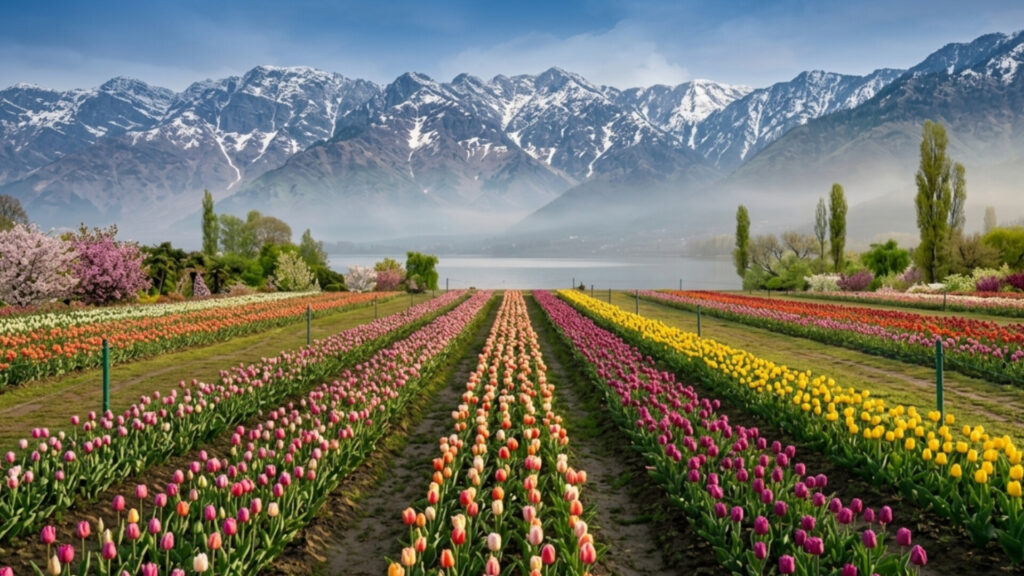
The Kashmir Tulip Garden Festival sprawls across terraced slopes at the foothills of the Zabarwan Mountains, making it the largest tulip garden in Asia. Visitors can therefore stroll along well-maintained pathways that guide them through the carefully planned terraces. Additionally, informational boards provide details about the various tulip varieties and the history of the festival. From these vantage points, the layout allows for uninterrupted views of the entire garden, giving tourists a complete sense of the scale and design. Seasonal flowers other than tulips, including daffodils and hyacinths, complement the tulip beds, further enhancing the visitor experience.
Photography enthusiasts will find the garden especially rewarding. For example, the terraces provide multiple angles for capturing the layout and scale of the blooms. Moreover, from wide panoramic shots to close-up details of the flowers, every corner offers a new perspective. Early in the morning or late in the afternoon, the soft light enhances the textures and shapes of the garden, making it perfect for photography.
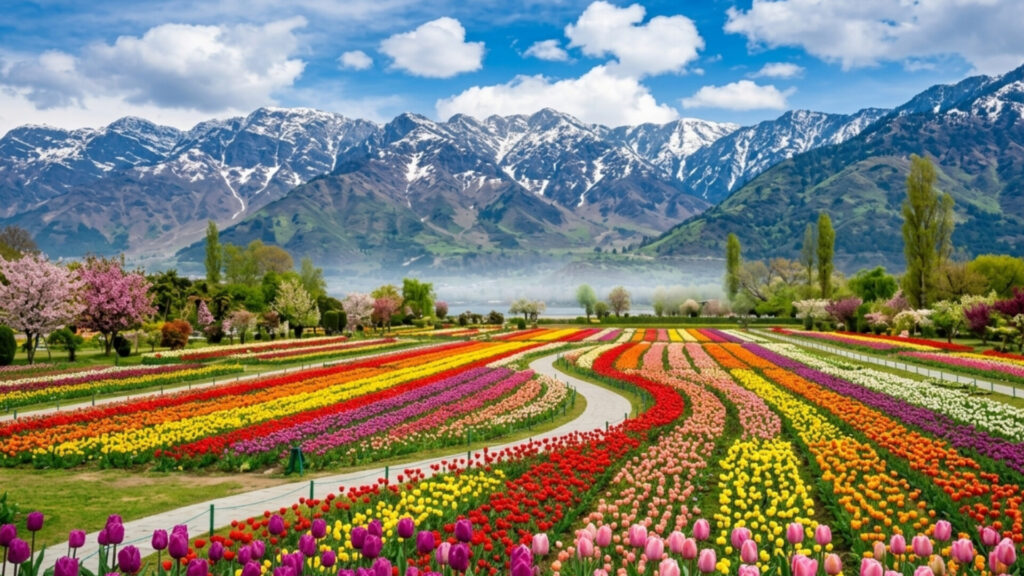
Every spring, the Indira Gandhi Memorial Tulip Garden becomes the highlight of the Kashmir tulip garden festival. This year, around 1.8 million tulip bulbs have been planted across the terraced garden. The plantation includes more than 70 varieties of tulips, attracting visitors from across India and abroad.
In addition to tulips, the garden also features seasonal flowers such as daffodils and hyacinths. As a result, visitors can enjoy a wider floral display while walking through the terraces. The layout is carefully planned to maintain a consistent bloom throughout the festival period.
The Kashmir tulip garden festival usually begins in mid-March and continues until mid-April. However, the exact bloom period depends on weather conditions each year. Therefore, visitors should check local updates before planning their trip. The first two weeks of April are generally considered the peak bloom period, when most tulips are fully open and the terraces look vibrant and well spread. The garden remains open daily from 6:00 AM to 8:00 PM, allowing plenty of time for visitors to explore.
Early morning visits, especially between 6:30 AM and 8:30 AM, are ideal for photography and smaller crowds. Weekdays are significantly less crowded than weekends, while public holidays tend to attract large numbers of tourists. The 2026 festival dates are expected to coincide with favorable spring weather, providing visitors with pleasant conditions for walking, photography, and enjoying the full beauty of the tulip gardens. Planning visits during these times ensures the best experience of the festival.The Kashmir tulip garden festival peaks in early April. Meanwhile, the Apricot Blossom Festival in Ladakh begins later, making it another great option for spring travel.
Visitors to the Kashmir tulip garden festival can purchase tickets at the entrance. The charges are as follows. Adults: ₹75. Children: ₹30. Foreign Visitors: ₹200. Tickets provide access to the garden for the duration of the visit. Early arrival is recommended, especially during peak bloom days, to avoid long queues.
The Kashmir tulip garden festival is more than a floral display; it highlights the rich culture of the region. Visitors can enjoy traditional music, folk dances, and live performances held in open areas throughout the garden. The festival also features handicraft exhibitions, where artisans display Pashmina shawls, handwoven carpets, and papier-mâché items. Tourists can explore the craftsmanship and purchase souvenirs, supporting local communities and promoting Kashmiri art.
Food adds another dimension to the experience. Several stalls serve authentic Kashmiri cuisine, including Rogan Josh, Yakhni, and the traditional green tea, Kahwa. Promotional stalls by tourism authorities provide insights into Kashmir’s history, traditions, and lifestyle, giving visitors a deeper understanding of the region beyond its natural beauty. Overall, the cultural celebrations and local art transform the festival into a holistic experience, combining nature, art, tradition, and community participation for a memorable visit.
To ensure a safe and enjoyable experience, visitors to the Kashmir tulip garden festival are requested to follow certain rules. Therefore, it is important to be aware of these guidelines before entering the garden.
Following these rules helps maintain the beauty of the garden and ensures a pleasant experience for all visitors. In addition, adhering to the guidelines supports the conservation of the site and the safety of everyone present
The Kashmir Tulip Garden is easily accessible by air, rail, and road, making it convenient for travelers from across India and abroad.
The nearest airport is Srinagar International Airport, about 22 km from the garden. Taxis cost ₹400–₹600, and early morning arrivals are recommended to avoid traffic and ensure a smooth journey.
Visitors can reach Srinagar Railway Station (Nowgam), roughly 18 km from the garden, via the Udhampur-Srinagar-Baramulla Rail Link (USBRL). Travelers may take a direct Vande Bharat sleeper from New Delhi or connect via Katra using Vande Bharat or MEMU trains, enjoying the scenic Chenab Bridge. From the station, taxis cost ₹800–₹1,000, and auto-rickshaws ₹400–₹500, with a travel time of 40–50 minutes.
The garden is reachable from Srinagar city or via NH-44 from Jammu (250 km, 6–8 hours). Local taxis and autos from Srinagar cost ₹200–₹350, and early morning departures help avoid traffic along Boulevard Road. Drivers often prefer Gupkar Road as a faster alternative.
While visiting the Kashmir Tulip Garden, tourists can explore several nearby highlights:
Overlooking the garden, Dal Lake offers serene shikara rides, ideal for early morning photography.
A short walk from the garden, Chashme Shahi isknown for its natural spring and peaceful terraced layout.
Nishat Bagh, the largest Mughal garden in Kashmir, features terraced lawns and flowing water channels.
Shalimar Bagh showcases classic Mughal design with symmetrical flowerbeds and fountains along Dal Lake.
Pari Mahal, perched on a hilltop, offers panoramic views of the lake and surrounding mountains, perfect for photography.
The Kashmir Tulip Garden Festival is more than just a floral display—it is a celebration of spring, culture, and natural beauty. Visitors can stroll along terraced slopes, admire countless tulip varieties, and capture memorable photographs, while nearby attractions like Dal Lake, Nishat Bagh, and Pari Mahal add layers of history and scenic charm. With easy access by air, rail, or road, and optimal visiting times in early April, the festival offers an unforgettable escape into the heart of Kashmir. For travelers seeking a mix of serene landscapes, cultural experiences, and vibrant blooms, the tulip festival remains an unmissable spring highlight in Jammu and Kashmir.


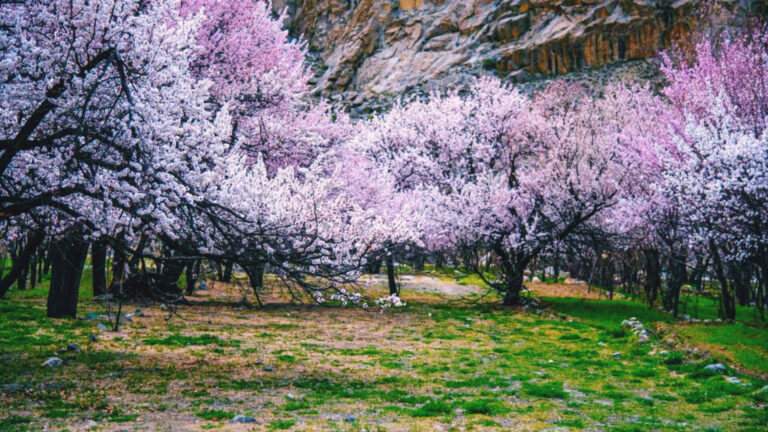








[…] Festival Ladakh offers a quieter and more unique Himalayan experience. (Read our guide to the Kashmir Tulip Garden Festival ). This creates a peaceful environment for visitors. Snow-capped peaks, colorful orchards, and […]